
Wedding photo ideas
Wedding photo booth alternatives your guests can use
A photo booth is a destination. Guests line up, pose, and leave with a consistent look. That is valuable — and incomplete. Most of the wedding happens away from the booth: dinner tables, dances, quiet conversations, and travel between spaces.
That is why couples searching for wedding photo booth alternatives are usually solving a coverage problem, not just a budget problem. They want more guest photos without forcing everyone into one corner of the venue. The best alternatives keep guests involved wherever the night actually unfolds.
Below are the strongest options, what each one is good at, and how to choose between a booth, a roaming digital camera, and a hybrid setup.
Photo booth strengths (so you know what you are replacing)
Before replacing a booth, be clear about what it does well. A booth is not only a photo collector. It is also an entertainment station with a predictable guest script.
- Clear activity guests understand immediately
- Consistent lighting and backdrop
- Props and entertainment energy
- Optional prints as party favors
- A natural place for group shots and silly poses
If those are non-negotiable, keep a booth or DIY portrait corner and add a roaming camera option for candids. Many of the best wedding setups are hybrids, not either-or decisions.
What a photo booth alternative needs to solve
A useful alternative should improve at least one of these: participation across the venue, lower logistics, or a more natural candid feel. The weak alternatives only cut cost while also cutting the guest experience.
- Coverage: Can guests contribute from dinner tables and the dance floor, or only from one station?
- Friction: Will the least tech-savvy guest understand what to do without a tutorial?
- Collection: Do the photos land in one place, or do you still chase files later?
- Atmosphere: Does the option feel like part of the wedding, or like an upload chore?
1. Give every guest a digital disposable camera
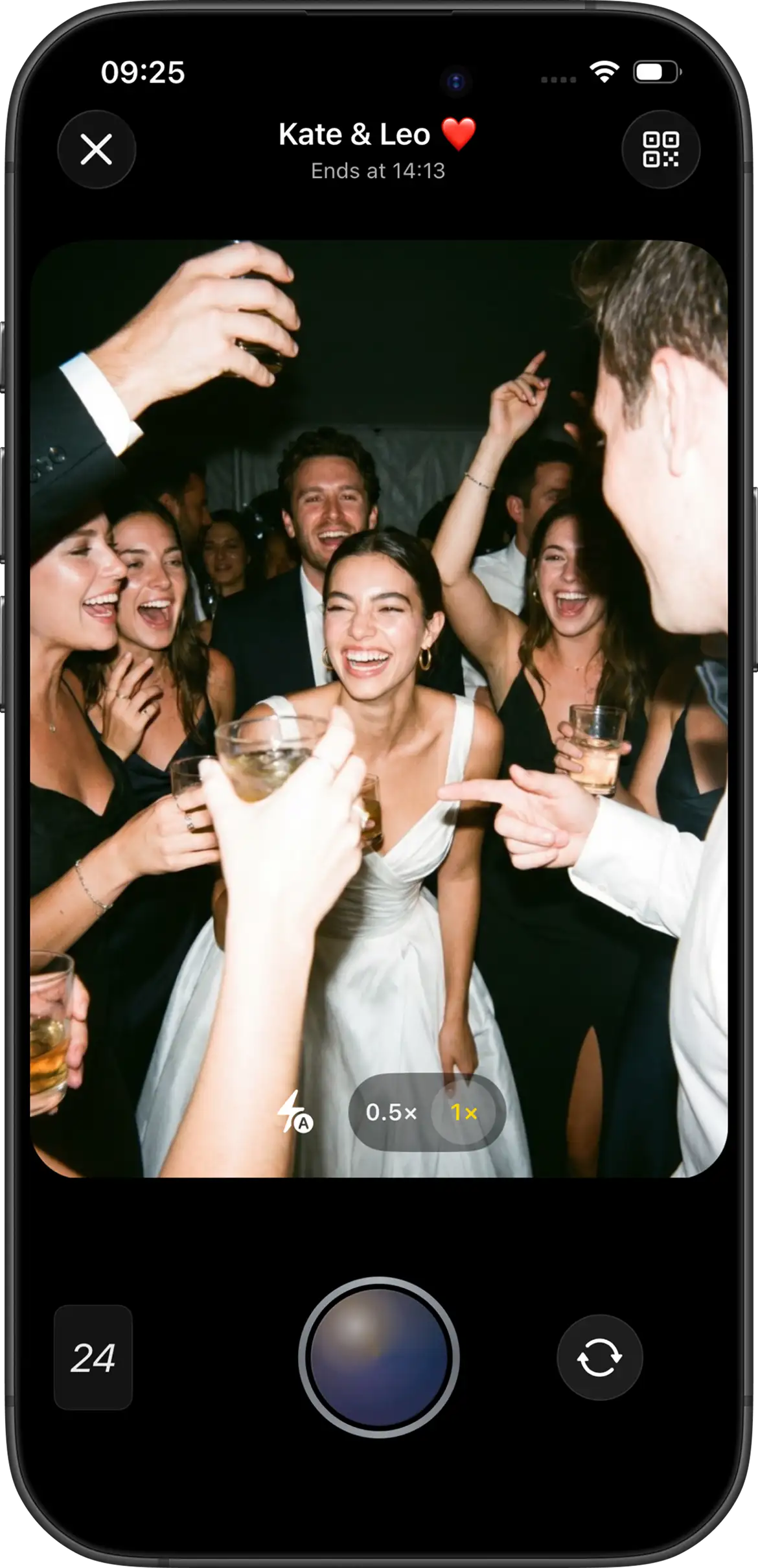
Instead of sending guests to one booth, let them capture the wedding wherever they are. Configurable shot limits encourage intentional photos. Delayed reveal keeps results surprising until after the event; instant reveal keeps a live gallery energy.
This is usually the strongest booth alternative when your real goal is candid coverage. Guests do not need to leave the conversation, find a line, or wait for a booth attendant. They scan once and start contributing from their own point of view.
Join Camera supports offline capture, Vintage or Black & White filters at event creation, iPhone App Clip join, and Android join via the Join Camera app. Guests can take shots without an account. Free tier: up to 5 guests and 24 shots each for testing. Video is not supported yet.
Best for: couples who want candids from the whole venue and a shared reveal after the wedding.
2. Create a QR code photo gallery
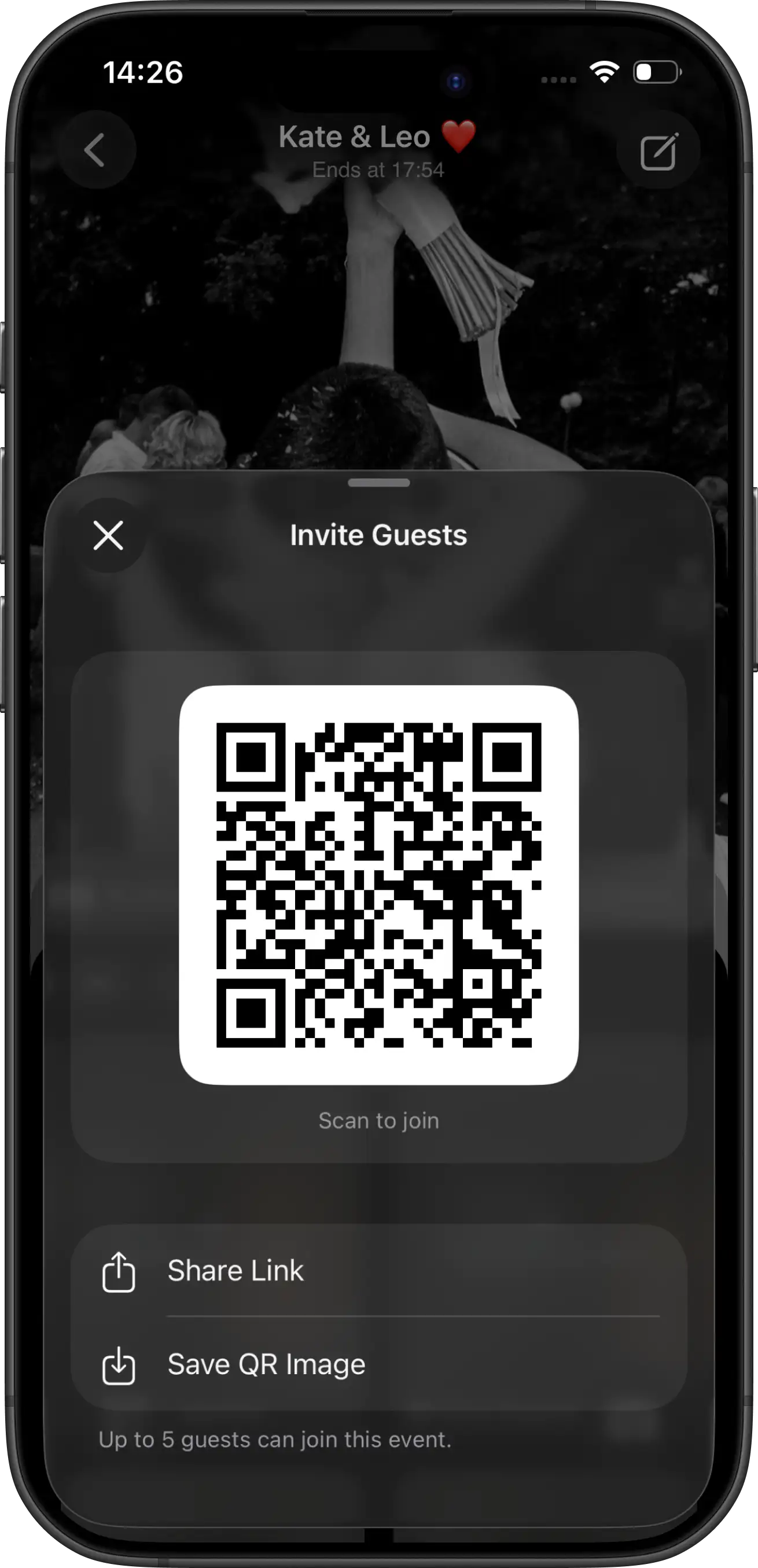
Place QR codes on tables so guests shoot or upload into a shared event. This prioritizes broad collection and can work with either a full event-camera flow or a simpler upload destination. The key is clear sign wording and repeated placement.
A QR gallery is especially useful when you want the invitation to travel with guests through the venue. It is also easier to scale than a physical booth because every table becomes a potential entry point. Pair it with short instructions so guests know whether they are taking shots now or uploading later.
See the wedding QR photo guide and wedding sign wording guide for placement and copy details.
3. Build a DIY portrait corner
Use a backdrop, good lighting, and a phone tripod to recreate booth energy without a rental truck. Guests can pose there and still contribute candids through the shared event camera.
A DIY corner keeps the destination feel of a booth while giving you more control over budget and branding. The trade-off is that someone still needs to think about lighting, props, and whether the station stays tidy during the reception. It solves the “posed portrait” job better than a roaming camera, but it does not replace roaming coverage by itself.
Best for: couples who want a styled photo moment without renting a full booth package.
4. Set up an instant camera guestbook
Leave an instant camera beside a blank book and ask each group to add a print and note. Beautiful and physical — but film runs out, and coverage stays near the station.
Instant cameras create keepsakes that digital systems do not. Guests love sticking a print into a book and writing a short message. The limitation is logistics: film cost, supervision, and the fact that the activity remains tied to one place. Treat this as a memory station, not as your only guest-photo system.
5. Use table photo challenges
Give tables a short list: a toast, a dance, an old friend, the best outfit. Challenges work with normal phone cameras or a shared digital disposable camera with shot limits.
Challenges are useful because they give shy guests a reason to participate. Instead of asking people to invent a photo idea, you give them a tiny creative prompt. They work especially well when paired with a shared event camera so every challenge photo still lands in one gallery.
Booth vs roaming camera: quick compare
| Need | Photo booth | Digital disposable camera |
|---|---|---|
| Posed group shots | Strong | Possible, less consistent |
| Candids across venue | Weak | Strong |
| Delayed reveal ritual | Usually instant prints | Host-controlled |
| Setup logistics | Vendor / power / space | QR signs + event settings |
| Guest understanding | Very high | High with clear signage |
When a hybrid setup is the best answer
Couples often frame this as booth versus alternative. In practice, the strongest weddings often use both in lighter forms. A DIY portrait corner or compact booth handles posed group energy. A shared event camera handles everything the booth will never see.
That hybrid approach also reduces pressure on either system. The booth no longer has to collect every guest memory, and the digital camera no longer has to create every formal-looking group portrait. Each tool does the job it is best at.
A simple hybrid plan looks like this: one styled portrait station for groups who want that moment, plus QR invitations on tables for roaming candids. Guests understand both activities quickly, and you still end the night with one main digital gallery plus optional prints or guestbook pages.
Common mistakes when replacing a photo booth
Assuming any QR code is enough
A QR that leads to a vague upload request is not a booth alternative. Guests need a clear reason to act during the wedding, not another reminder to send files later.
Removing the booth and adding nothing fun
Booths succeed partly because they feel like entertainment. If you remove the booth, replace that energy with a clear ritual: limited shots, a shared reveal, table challenges, or a styled DIY corner.
Splitting collection across too many systems
A booth strip here, a shared album there, and a group chat on the side recreates the exact fragmentation couples are trying to escape. Pick one primary digital destination.
How to choose quickly
- Choose a booth or DIY corner if posed portraits, props, and a destination activity matter most.
- Choose a digital disposable camera if candid coverage and one shared reveal matter most.
- Choose an instant camera guestbook if physical keepsakes matter more than complete digital coverage.
- Choose a hybrid if you want both entertainment and full-venue candids.
If you are comparing broader disposable-camera replacements beyond booths specifically, see alternatives to disposable cameras at weddings.
Try a roaming wedding camera


Questions? Contact us.
Frequently asked questions
What is the best wedding photo booth alternative?
For candid coverage across the whole venue, a digital disposable camera or QR guest camera usually outperforms a single booth. Booths are still strong when you want a styled destination with consistent lighting and posed group shots. Many couples get the best result by combining both: a booth or DIY portrait corner for portraits, plus a roaming shared camera for everything else.
Can a disposable camera app replace a photo booth?
It can replace the need for every guest photo to happen in one location, but it does not fully replace a styled backdrop experience. A digital disposable camera shines at candids, table moments, and dance-floor coverage. A booth still wins for consistent posed portraits, props, and optional prints. Choose based on what you want more of: roaming coverage or a destination activity.
How do guests join a digital alternative?
With Join Camera, guests scan a QR code or open an invite link. iPhone guests can join through the App Clip without installing the full app first. Android guests join from the same QR code or invite link in the Join Camera app. Guests can take shots without creating an account, which keeps the experience closer to a party activity than a software setup.
Is a photo booth alternative cheaper?
Often yes compared with a full rental booth, especially when you use a free or low-capacity digital tier for testing. Exact cost depends on guest count and whether you still want prints, props, or a DIY portrait corner. The better question is usually not only price, but what kind of photos you want to bring home.
Should we still hire a photo booth if we use a shared event camera?
You can. The two solve different jobs. The booth creates a destination and a consistent look. The shared event camera captures the rest of the wedding wherever guests actually are. If budget forces a choice, decide whether posed portraits or candid coverage matter more to you.
Related: alternatives to disposable cameras · Join Camera for weddings · collect guest photos · wedding QR photo sharing